 Tel:
Tel: 07092
07092 Twitter
Depression and feeling low
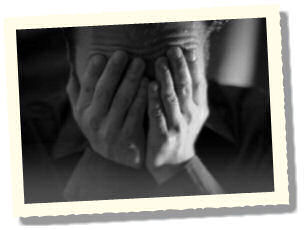
Depression isn't just about feeling a bit 'fed-up' for a while. We can't simply 'snap out of it'. When we’re depressed we may have feelings of deep sadness or despair that can last a long time. These feelings interfere with our daily lives and can last for weeks or months.
By the year 2020 depression is likely to be second after cardiovascular disease in the 'league table' of the world's most disabling diseases.1 A recent report by Depression Alliance suggests that three quarters (75%) of all the people in England have experienced either depression or anxiety at some time in their lives.2
While depression is very common (15% of people will have severe depression at some point in their lives), the exact number of people with depression is hard to estimate because many people don't get help or are not diagnosed correctly.
Try these two quick questions:
- During the past month, have you often been bothered by feeling down, depressed or hopeless?
- During the past month, have you lost interest or pleasure in things you used to enjoy?
If you answered 'yes' to either or both questions, you might have depression. You might want to complete the PHQ-9 which asks a few more questions about the symptoms of depression.
Perhaps it is partly because the onset of depression can be slow, and because we can all feel 'down' from time to time, that depression often remains unrecognised and untreated. It's thought that women may be more likely to suffer from depression than men, although this may be because men tend to be less likely to seek help.
The feelings of hopelessness that accompany depression prevent many people from seeking help - they ask themselves 'what's the point?'
When we start asking ourselves 'what's the point?' it's often a good indicator of depression - when we're feeling OK it's a question we rarely ask ourselves!
We know that, when depression is recognised, 'talking treatments' such as counselling and psychotherapy can be very effective, both on their own and when used alongside antidepressant medication.
To help assess your symptoms the Goldberg Depression Scale is available at the foot of this page.
What is depression?
Depression affects people in many different ways and can cause a range of physical, psychological and emotional symptoms.
Because the onset of depression can be slow and because men in particular tend to deny their 'vulnerabilities', depression can be more obvious to other people than it is to ourselves!
Some people with depression have a range of physical symptoms, many contact their GP believing the cause of their problems to be something other than depression.
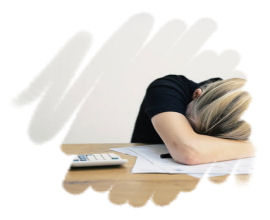
They may feel 'out of sorts', tired or anxious. They might not be able to enjoy things like they used to or feel that life is pointless, meaningless or 'passing them by'. They may be irritable, have trouble sleeping or suffer from a range of relatively minor but troubling ailments.
It's difficult when the 'problems' we have turn out to be 'symptoms' of something else; it can be hard to accept that our symptoms might be due to depression. We may resist this 'all in the mind' diagnosis, preventing early treatment and so suffering needlessly.
While depression is extremely common, new antidepressant medication is effective and non-addictive. The great majority of people with depression are treated by their own GP, without ever needing to see a psychiatrist or mental health professional.
Causes of depression
For some people, upsetting or stressful life events such as bereavement, divorce, illness, redundancy and work or money worries can be the trigger.
People with a family history of depression are thought to be more likely to get depression themselves. Studies have shown that different versions of a gene (known as 5-HTT) can be inherited, which can have an effect on a natural mood-changing chemical in our brains called serotonin.
About 20% of people have what's known as the 'short' version of the 5-HTT gene, and it seems that these people may be more likely to develop depression after a stressful event. Children inherit the 5-HTT gene from their parents, so a vulnerability to depression can run in families.
However, just because there is depression in our family doesn't necessarily mean we will suffer depression. Many people with no genetic predisposition also become depressed, so this isn't the complete answer.
Research has shown there to be a link between depression and an imbalance of brain chemicals called 'neurotransmitters'. People who are depressed have a lower level of certain types of neurotransmitters, particularly serotonin, norepinephrine and dopamine. It's not yet fully understood whether this chemical imbalance is a result of depression or a cause of it.
Depression and physical health
Depression is very common when we're ill for a long time. Some physical health problems can be quite likely to make us depressed - for example, heart disease (e.g. angina, heart failure), chronic obstructive pulmonary disease or COPD (e.g. chronic bronchitis or emphysema), neurological conditions (e.g. Multiple Sclerosis, Parkinson's Disease), cancer and diabetes all commonly lead to depression.
If you suffer from any of these illnesses it's a good idea to check with your health professional whether you might also have depression. Of course chronic ill health will make us feel fed-up and miserable from time to time. The risk is we might not notice ourselves slowly becoming depressed and suffer needlessly.
Some illnesses, for example hypothyroidism (myxoedema or an underactive thyroid gland) can be relatively easy to treat. The symptoms of hypothyroidism can be quite difficult to distinguish from those of depression.
There is rarely one single cause of depression - sometimes a 'downward spiral' of events can trigger the condition. For example, we may be under a lot of stress, we may spend too much time in work, feel low and weakened after an illness and then experience a stressful life event which may lead to depression. Sometimes we can identify no reason at all.
When we're depressed we often lose interest in things that we used to enjoy. In fact, the very things that used to make us happy can make us feel even worse when we're depressed.
Depression interferes with work and with our social and family life. We can think about depression in terms of its psychological, physical and social symptoms.
Symptoms of depression
Psychological symptoms
- Continuous low mood or sadness
- Feeling apathetic and hopelessness
- Hearing critical voices in the head (with severe depression)
- Feeling tearful
- Feeling guilty
- Feeling angry, irritable, impatient and intolerant
- Lacking motivation
- Finding it hard to make decisions
- Finding no pleasure in life
- Suicidal thoughts
- Believing people would be better off without you
- Feeling anxious, agitated or worried all the time
- Thinking the same things over and over again
- Having a very poor memory
- Finding it hard to concentrate on things
- Thinking everything's futile - 'what's the point?'
Physical symptoms
- Slowed movement or speech
- Change in appetite or weight
- Changes in appearance (e.g. slow gait, stooped posture, head in hands)
- Constipation
- Aches and pains (Medically Unexplained Symptoms, or MUS)
- Lack of energy
- Loss of sex drive (libido)
- Changes to the menstrual cycle
- Disturbed sleep (especially waking in the early hours of the morning)
Social symptoms
- Performing poorly at work
- Avoiding social activities
- Lack of interest in hobbies and interests
- Difficulties in home and family life (e.g. frequent arguments)
- Withdrawing from friends and family
It's important to understand that many factors other than depression or anxiety can cause some of the symptoms listed above. Diagnoses can only be provided by appropriately trained health professionals. If you are concerned in any way about your symptoms, please consult with a trained professional.
It's important to remember that depression can be very serious - for some people mild depression is an ever-present distraction that drains joy from life.
For others, it can stop them in their tracks and lead them to suicide. If you think you might be suffering from depression, please speak with your doctor as soon as possible to make sure you get the right treatment - many of the new antidepressants can be very effective, as can talking with a professional about how you feel.
- Murray CJ, Lopez AD; Alternative projections of mortality and disability by cause 1990-2020: Global Burden of Disease Study. Lancet. 1997 May 24;349(9064):1498-504.
- Depression Alliance. Daring to Choose: 10 ways to deliver Choice for people with depression and anxiety. (Report 2009)
- Goldberg, D., Bridges, K., Duncan-Jones, P. & Grayson, D. (1988). Detecting anxiety and depression in general medical settings. British Medical Journal. 297: 897-899.
Thanks for reading to the end.
Best wishes to you


Page last updated: Monday, January 4, 2016